


How to Test a TWAIN Scanner Driver with Twacker (and Fix Common Issues)
You may get problems when using your application with some scanners and wonder whether it is the issue with your application or it is the device issue.
If you are using a TWAIN library and your application is supposed to work with all TWAIN compatible devices, you can use Twacker, which is a TWAIN application developed by The TWAIN Working Group. It allows you to exercise features of a TWAIN driver and to see whether the driver of your device is working fine or not.
What you’ll build: A quick diagnostic workflow using Twacker and Dynamic Web TWAIN to isolate whether a scanner acquisition failure is caused by the device driver or your application code.
Key Takeaways
- Twacker is the official TWAIN Working Group tool for verifying whether a device driver is TWAIN-compliant and functional.
- Testing with Twacker before debugging your own application eliminates driver issues as a root cause.
- Dynamic Web TWAIN’s online demo lets you test any TWAIN scanner in a browser without writing any code.
- A virtual TWAIN scanner can be installed on Windows to simulate a physical device during development and CI/CD testing.
Common Developer Questions
How do I test if my TWAIN scanner driver is working correctly on Windows?
Install the matching 32-bit or 64-bit version of Twacker, select the scanner source, and try a real acquisition there before debugging your own app. If Twacker cannot acquire successfully, the problem is likely in the driver or device setup rather than your code.
How do I check whether a scanner acquisition failure is a driver problem or an application bug?
Run the same acquisition through Twacker first. If Twacker also fails, the device driver or scanner configuration is the root problem; if Twacker succeeds while your app fails, the bug is in your SDK integration, state handling, or application logic.
How can I test TWAIN scanning without a physical scanner?
Use a virtual TWAIN scanner such as TWAIN DS on Windows to simulate acquisitions and verify your workflow without hardware. For a quick smoke test, the Dynamic Web TWAIN online demo also lets you confirm that browser-side scanning works end to end.
Download and Install Twacker
How to Diagnose Your Scanner with Twacker
After the installation, you can follow the steps below to test your scanners.
-
Launch Twacker. Go to Windows ‘Start’ menu and type ‘Twacker’.

-
Connect to your scanner. Click menu File-> **Select Source **, and you will see all the available sources available on your machine.

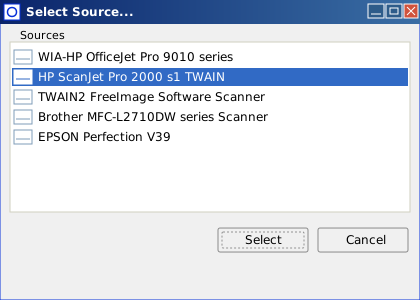
-
Test your scanner. Under File menu, check ShowUI to show the user interface of the device. With UI hidden, you can use the Automatic Feeding setting to test ADF scanning.
Click Acquire to initiate scanning and see how your device works.
-
Troubleshoot. If you fail to acquire images from your scanner using Twacker, you can adjust the Message Level to see if you can get more information to pinpoint the cause of the issue. Under Special menu, you can also check the TWAIN State transition info.
Test Your TWAIN Scanner Online Without Any Code
You can also test your scanner using the online demo of Dynamic Web TWAIN, which is a browser-based TWAIN SDK. You only need to install a background service from your browser (Internet Explorer/Chrome/Firefox, Safari) and have a quick check for your scanner online.
Learn more about Dynamic Web TWAIN
Install a Virtual TWAIN Scanner for Codeless Testing on Windows
TWAIN DS is a virtual scanner that can be used to test TWAIN drivers. It is a Windows application that can be downloaded from here:
Common Issues & Edge Cases
- Scanner not listed in Twacker’s source list: The TWAIN driver may not be installed, or a 32/64-bit mismatch exists between Twacker and the driver. Try the opposite bitness installer to confirm.
- Twacker acquires successfully but your app fails: This confirms the driver is healthy and the problem is in your application layer — typically an incorrect TWAIN state transition, missing capability negotiation, or a 32/64-bit incompatibility in your SDK integration.
- ADF (Automatic Document Feeder) does not page-feed: Enable Automatic Feeding in Twacker with ShowUI disabled. If it still fails, the ADF capability may not be supported or is misconfigured in the driver — contact the scanner manufacturer with the Twacker Message Level log.