


 Blog
Blog
How On-Device Scanning Supports GDPR and HIPAA Compliance
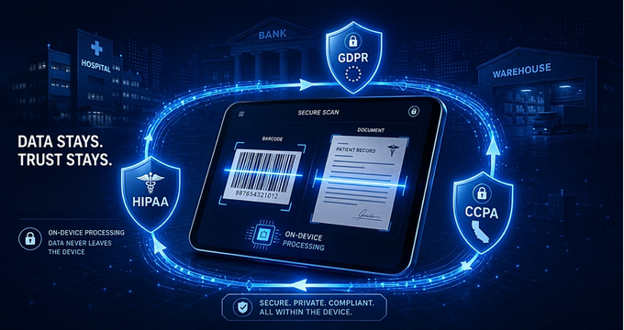
Modern enterprises capture more data through scanning than ever before. Barcode and document scanning applications often handle sensitive data, from patient wristbands in hospitals and financial documents in banks, while also driving operational efficiency. These applications are now subject to significant regulatory scrutiny.
With frameworks such as GDPR, HIPAA, and CCPA enforcing stricter requirements, organizations building or deploying scanning applications must prioritize privacy. Every stage of the workflow: capture, processing, transmission, and storage should be designed for compliance from the outset, not retrofitted later.
Key Takeaways
Before diving into the details, here are the essential insights this article covers:
- Barcode and document scanning applications routinely handle PII, PHI, and financial data, placing them under major data protection regulations.
- Cloud-dependent scanning architectures often introduce unnecessary risk by routing sensitive information through external servers.
- On-device and offline processing is one of the most effective ways to limit data exposure in scanning workflows.
- Healthcare, finance, and logistics are among the industries most heavily affected by compliance obligations tied to scanning use cases.
- Choosing an SDK that supports local processing, retains no scanned data, and offers deployment flexibility is a key technical and procurement decision.
Compliance Glossary for Scanning Applications
Understanding key regulatory terminology is essential before evaluating scanning architectures, as these terms are commonly used during vendor evaluations and security assessments. This glossary provides the context needed to interpret compliance requirements throughout the evaluation process.
| Term | Definition |
|---|---|
| GDPR | The European Union’s General Data Protection Regulation governs the collection, processing, and transfer of personal data. |
| HIPAA | The U.S. Health Insurance Portability and Accountability Act regulates the handling of Protected Health Information (PHI). |
| CCPA | The California Consumer Privacy Act provides California residents with rights regarding personal information collected by organizations. |
| PHI | Protected Health Information includes medical records, patient identifiers, and healthcare-related data. |
| PII | Personally Identifiable Information includes names, addresses, government IDs, and account information. |
| Data Residency | Requirements that specify where data may be stored, processed, or transferred geographically. |
| On-Device Processing | This deployment model ensures barcode decoding or document processing occurs locally instead of on a third-party server. |
Why Scanning Applications Are Subject to GDPR and HIPAA
Scanning a barcode or capturing a document may seem low-risk, but the data encoded in it is often highly sensitive. This reality significantly impacts compliance requirements. Medical device labels contain patient identifiers, prescription barcodes link to pharmaceutical records, and financial documents include account numbers and addresses. In each case, scanning is a regulated data capture event.
The Types of Data at Stake
Understanding the types of data handled by scanning applications clarifies which compliance frameworks apply. The table below outlines the most common combinations.
| Data Type | Common Scanning Context | Relevant Regulation |
|---|---|---|
| Protected Health Information (PHI) | Patient ID wristbands, prescription labels, medical records | HIPAA (U.S.) |
| Personally Identifiable Information (PII) | Government ID documents, invoices, onboarding forms | GDPR (EU), CCPA (U.S.) |
| Financial Data | Bank statements, check processing, tax documents | PCI-DSS, SOX |
| Logistics and Supply Chain Records | Shipping labels, warehouse inventory | Varies by jurisdiction |
Each data category has specific regulatory requirements, and organizations operating internationally often need to comply with multiple frameworks at once.
Cloud-Based Scanning: Key Compliance Risks Developers Should Understand
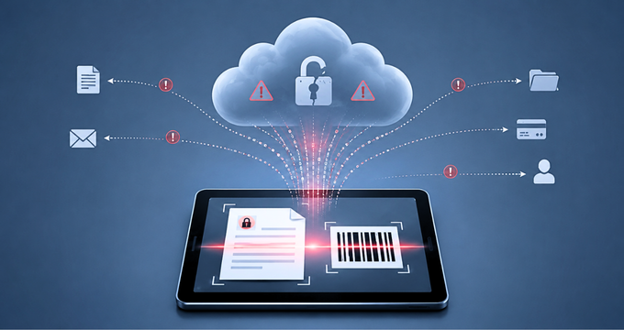
Many scanning applications rely on cloud-based architectures that send captured data to external systems for processing. For regulated content, this approach introduces significant compliance risks that require careful evaluation.
The Hidden Risks of Cloud-Based Processing
Transmitting sensitive data outside the local environment, even briefly, raises several concerns organizations should carefully evaluate:
- Data residency violations: GDPR restricts the transfer of EU personal data to jurisdictions without adequate protection. A cloud-scanning API hosted outside the EU can trigger a violation even if the data is processed there only momentarily.
- Audit trail gaps: HIPAA requires organizations to track who accessed which data and when. External API processing often lacks the detailed logging needed to meet these requirements.
- Third-party liability: If a vendor processes user data on their infrastructure, the deploying organization may still be primarily liable in the event of a breach.
- Log retention exposure: Some third-party APIs retain request logs that contain transmitted content, creating risks that the deploying organization is unable to manage.
What Is On-Device Scanning and How Does It Support Compliance?
A practical response is to keep processing under the organization’s direct control. On-device processing ensures barcode decoding and document capture occur locally, without data leaving the user’s device or the organization’s infrastructure.
The compliance advantages are significant: no data is transmitted to third parties, audit trails remain internal, the architecture aligns with GDPR’s data minimization principle, and workflows function even without reliable network connectivity.
Regulatory Requirements for Scanning Apps by Industry: Healthcare, Finance, and Logistics
Regulatory obligations differ by industry. Understanding how these apply to scanning workflows helps teams ask the right questions during evaluation and procurement.
Healthcare
Under HIPAA, any scanning application that reads patient wristbands, medication barcodes, or medical records is in scope. SDKs in these contexts must be evaluated for data transmission or retention, as either increases compliance risk.
Financial Services
Institutions processing scanned checks, identity documents, or account statements must comply with PCI-DSS and relevant financial privacy laws. Fully on-premises document capture, without cloud dependency, is often required in enterprise banking.
Logistics and Supply Chain
Shipping labels include recipient names and addresses, while customs documents may contain national identification numbers. Cross-border operations often fall under GDPR and similar regulations in markets such as Brazil (LGPD) and India (DPDPA).
Questions to Ask a Scanning SDK Vendor About Data Handling and Compliance
These questions help identify architectural risks before integration, whether during a security review, procurement evaluation, or compliance assessment.
| Question | Why It Matters |
|---|---|
| Does the SDK transmit captured barcode or document data to vendor-controlled servers? | This determines whether sensitive information leaves your environment and introduces additional compliance obligations. |
| Do you retain request logs, images, or decoded data? | Data retention practices affect privacy requirements, audit obligations, and vendor risk assessments. |
| Can the SDK operate fully offline, on-premises, or in air-gapped environments? | Deployment flexibility is essential for regulated industries and high-security environments. |
| What data processing agreements or compliance documentation do you provide? | Supporting documentation simplifies GDPR, HIPAA, and enterprise procurement reviews. |
| How are updates, telemetry, and diagnostic reporting handled? | These features can create additional data flows that should be evaluated during security assessments. |
| Can deployment be restricted to specific geographic regions? | This helps organizations meet data residency and sovereignty requirements. |
Offline Scanning with Dynamsoft
Once compliance requirements are clear, then next step is practical; how can development teams build scanning applications that protect sensitive data without sacrificing speed or user experience? Dynamsoft SDKs are designed to support offline and client-side scanning workflows, giving organizations greater control over where barcode and document data is processed.
With Dynamsoft Barcode Reader, barcode scanning can run directly in the user’s environment, including web browsers, mobile apps, desktop application, and private server deployments. For web applications, Dynamsoft’s JavaScript SDK uses WebAssembly resource and browser camera input to decode barcodes without requiring captured images to be sent to an external scanning service. This helps teams reduce unnecessary data transfer while supporting privacy-focused requirements such as GDPR data minimization and HIPAA technical safeguards.
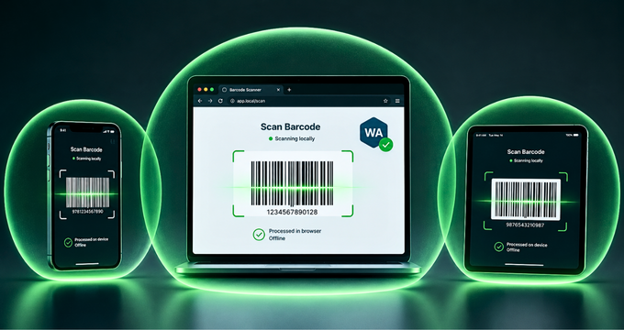
For document-heavy workflows, Dynamic Web TWAIN enables browser-based scanning, keeping document capture under the organization’s control. Dynamic Web TWAIN SDK supports on-premises deployment for enterprise document scanning in healthcare and financial services, enabling IT teams to retain full control over document storage. The Document Normalizer extends this by processing and standardizing scanned images entirely within the organization’s infrastructure.
During vendor assessments, note that Dynamsoft does not receive, store, or access captured barcode values or document images. This distinction simplifies data processing agreements required under GDPR or HIPAA vendor reviews.
Start a free trial of Dynamsoft Barcode Reader for secure barcode scanning, or evaluate Dynamic Web TWAIN for enterprise document capture. Both solutions support on-device and on-premises deployment models for privacy-sensitive applications in healthcare, finance, government, and logistics.
Frequently Asked Questions
These are the most common questions teams ask when evaluating scanning technology for compliance-sensitive deployments.
Does barcode scanning fall under GDPR or HIPAA?
It depends on the data encoded. If a barcode or scanned document contains personal data, such as a patient ID, name, or financial account reference, capturing and processing it is subject to applicable regulations. The data and its context, not the scanning method, determine the obligation.
What is on-device processing, and why does it matter for compliance?
On-device processing means barcode decoding or document capture occurs entirely on the local device or within the organization’s infrastructure, not on an external server. This eliminates third-party data transfer risk, supports data residency, and gives the organization full control over audit logging and retention.
Can a scanning SDK be used in a HIPAA-compliant application?
Yes, but SDK architecture is critical. An SDK that transmits captured data to vendor servers requires a Business Associate Agreement and increases deployment risk. An SDK that processes data entirely on-device, with no vendor retention, significantly simplifies HIPAA compliance because the vendor never handles PHI.
How to Build a Compliance-Ready Barcode Scanning Architecture
As privacy regulations expand, organizations building or deploying scanning applications need a clear understanding of how these tools handle captured data. The most effective response is architectural: keep processing local, minimize data transmission, preserve full auditability, and choose scanning technologies designed for these requirements.
Dynamsoft’s SDKs enable developers and IT leaders to build high-accuracy scanning applications without compromising compliance. On-device processing, flexible deployment models, and a no-retention architecture provide a strong foundation for regulated industries.
Ready to build a compliant scanning solution?
Get in touch with the Dynamsoft team to discuss your deployment requirements or explore the available SDKs to find the right fit for your use case.
As privacy regulations expand, organizations building or deploying scanning applications need a clear understanding of how these tools handle captured data. For example, whether a healthcare provider scans patient wristbands, a bank captures account documents, or a logistics company processes shipping labels, compliance outcomes often depend on architectural decisions made during implementation.
Swiss healthcare platform 2Weeks uses Dynamsoft Barcode Reader to scan QR codes for COVID-19 testing and vaccination workflows. In healthcare environments that handle sensitive patient information, secure and reliable barcode processing is essential for maintaining privacy and regulatory compliance.
The most effective approach is architectural: keep processing local, minimize data transmission, preserve full auditability, and select scanning technologies designed for these requirements.