


 Blog
Blog
How Batch Barcode Scanning Optimizes Warehouse Efficiency
Solving the Manual Barcode Scanning Bottleneck
Transitioning from individual scans to automated data capture is the first step toward modernizing high-volume warehouse and distribution center operations.
As supply chains grow more complex and time-sensitive, warehouses are expected to move faster, handle more SKUs, and maintain near-perfect accuracy—all without increasing headcount. While automation has transformed many warehouse operations, one critical task still slows everything down: manual barcode scanning. For many teams, the process of scanning items one by one remains a bottleneck within otherwise streamlined workflows. As volumes grow and demands tighten, operations leaders are rethinking barcode scanning—and exploring new methods to scale accuracy and speed simultaneously.
Batch barcode scanning is a computer-vision approach that detects and decodes multiple barcodes simultaneously from a single camera capture, allowing warehouse workers to scan dozens or even hundreds of items in seconds.
Key Takeaways for Improving Warehouse Efficiency with Batch Barcode Scanning
- Eliminate Bottlenecks: Batch scanning enables operators to capture over 100 barcodes at once, eliminating delays from traditional one-by-one scanning.
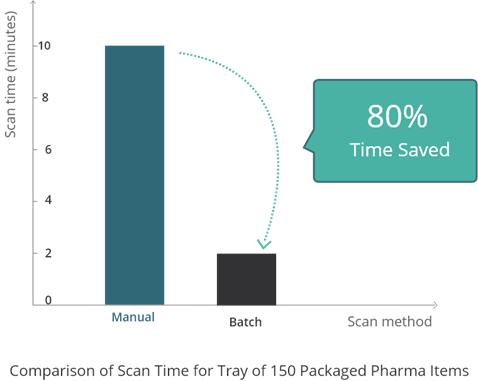
- 80% Faster Inventory Processing: Tasks that take 10 minutes with handheld scanners can be completed in about 2 minutes with batch barcode capture.
- Higher Inventory Accuracy: Visual confirmation and automated SKU counting help reduce missed scans and duplicate entries in mixed-SKU environments.
- Built for Modern WMS Environments: Batch scanning solutions integrate with warehouse management systems and operate on iOS, Windows, Linux, and web platforms.
Limitations of Traditional Manual Scanning
Identifying breakdowns in manual barcode workflows helps operations leaders target high-impact automation opportunities.
Barcodes power almost every warehouse process—from receiving to shelving, order picking, packing, and auditing. But despite widespread automation elsewhere, barcode scanning itself has frequently remained a manual, one-by-one task.
As SKU counts increase and fulfillment timelines shorten, manual scanning introduces several operational risks:
- Slower receiving and inventory processing
- Higher probability of missed or duplicate scans
- Labor-intensive handling of densely packed inventory
- Limited traceability during audits and compliance reviews
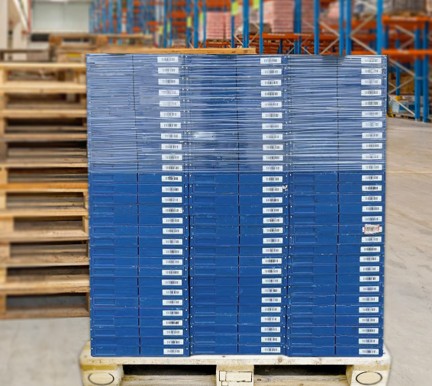
The penalty of scanning manually one-buy-one is most noticeable in scenarios such as:
- Pallets arriving at receiving – Stacked items with multiple SKUs. Workers may need to move items or cut plastic wrap. Duplicate scans and missed barcodes slow down throughput.
- Bulk storage bins or totes during picking – Densely packed containers with items stacked or jumbled together. Workers may need to unpack items to access individual barcodes. Manual scanning means slower pick confirmation and higher chance of errors.
- Cycle counting across densely packed shelves – Cycle counts should be minimally disruptive but manually scanning densely packed shelves slows the process and undermines accuracy. Items are more easily skipped or double counted.
- Inbound QA or blind receipts – Items arriving without a packing list or needing inspection before receiving need to be scanned and verified manually. There’s no quick way to verify completeness without full unpacking. Receiving errors (wrong quantity or wrong item) need visual confirmation.
In high-volume distribution environments, these inefficiencies add up across thousands of scans each day.
What Is Batch Barcode Scanning?
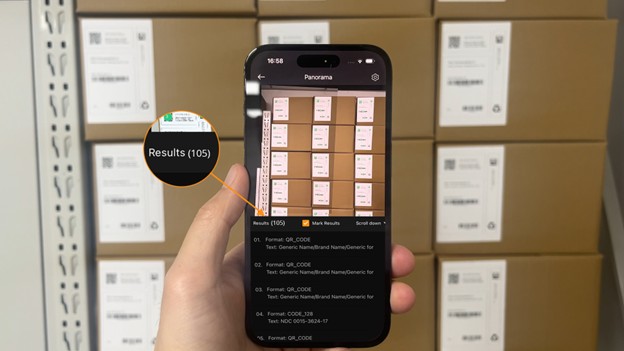
Batch barcode scanning is a data capture technique that reads multiple barcodes from a single image using computer vision and multi-code decoding.
To address these challenges, many warehouses are now considering batch barcode scanning: scanning all barcodes in view at once. Batch barcode scanning uses advanced capture techniques that detect, decode, and record multiple barcodes in a single image-based scan.
This emerging approach allows workers to:
- Scan 100+ barcodes at once using a mobile device
- Instantly count quantities of each SKU
- Quickly find specific items in the batch
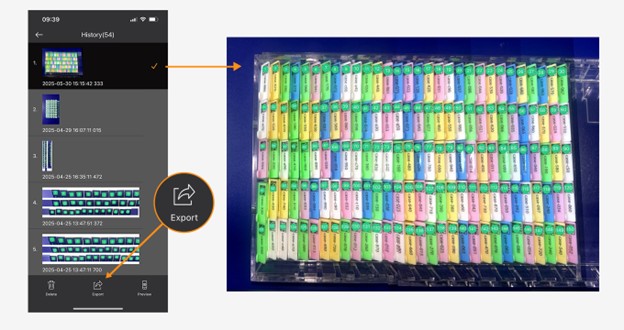
- Verify items and create a visual record that shows exactly what was scanned
- Maintain traceability and compliance without extra paperwork or manual logging
Important Use Cases for Logistics and Warehouse Operations
Applying batch barcode capture to specific workflows shows how modern scanning software removes operational bottlenecks.
Receiving
Scan complete pallets on arrival. Check contents in a single scan – even with mixed SKUs. Verify inventory with an image of the complete scanned area and save as .CSV file for archive.
Picking
Find the correct item quickly in a stack, shelf or drawer. Confirm that the correct items were picked before shipment, without manually scanning each label.
Auditing
Complete rapid cycle counts or spot checks using a bulk scan of the complete set instead of paper-based checklists.
Compliance & QA
Capture visual evidence of inventory checks, lot numbers and expiry dates for regulated goods such as food, pharmaceuticals or electronics.
These workflows are most effective when large numbers of barcodes need to be verified quickly without handling each item.
Quantifying Efficiency: Speed, Accuracy, and Traceability
Batch barcode scanning delivers more than time savings by improving operational visibility and inventory reliability.
The most immediate and measurable benefit of batch scanning is the dramatic reduction in time spent on routine inventory tasks.
Manually scanning 150 items can easily take more than 10 minutes with a handheld scanner, especially when barcodes are small and densely packed. With batch scanning, the same task takes only 2 minutes – 80% time savings.
Across dozens of daily warehouse transactions such as receiving, picking validation, and cycle counting, these efficiency gains significantly increase overall throughput.
More than Speed - Accuracy and Traceability
The advantage of batch scanning is not just speed – it’s also about accuracy and traceability. When bulk scanning is integrated into warehouse management systems, operations gain:
- Fewer missed scans and inventory mismatches
- Visual proof for audits or compliance reviews
- Faster identification of expired items or lots
- Reduced worker fatigue and scanning errors
As warehouses grow ever more complex, and fulfilment expectations soar, these benefits compound, making a strong case for re-evaluating scanning strategies.
Rethinking Barcode Scanning for Modern Warehouses
Barcode scanning remains a bottleneck in otherwise efficient warehouse operations. The technology to transform receiving, inventory checks, and order verification is now here.
As warehouses scale to support e-commerce, omnichannel fulfillment, and global supply chains, faster inventory data capture is essential.
Batch scanning offers a practical, scalable way to remove bottlenecks while improving accuracy and reinforcing compliance.
It’s time to scan smarter.
Build High-Performance Batch Barcode Scanning with the Dynamsoft Barcode Reader SDK
Professional-grade developer tools enable organizations to build custom batch-scanning workflows tailored to their warehouse systems.
Our Batch Barcode Scanner is designed to scan 100+ barcodes. It is effectively unlimited since we read multiple frames and panoramic stitching techniques.
The Dynamsoft Barcode Reader SDK enables developers to integrate high-performance batch scanning into warehouse applications, mobile devices, and enterprise systems.
Our solution is currently available for iOS, Windows, Linux, and JavaScript (beta).
Watch the video to see batch scanning in action.
Ready to start scanning smarter?
Schedule a call to discuss your specific use case.