


 Blog
Blog
What Causes Traceability Gaps in the Pharmaceutical Supply Chain - and How to Close Them
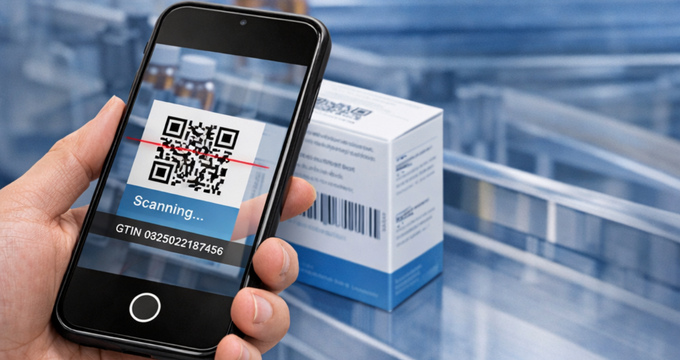
Traceability gaps occur when the physical movement of pharmaceutical products is not accurately reflected in digital records. These gaps break the “digital thread” required for compliance with regulations such as the U.S. Drug Supply Chain Security Act (DSCSA) and the EU Falsified Medicines Directive (FMD).
In modern global supply chains involving manufacturers, contract manufacturers, distributors, and dispensers, even a small visibility gap can disrupt audits, complicate recalls, and create patient safety risks.
Key Takeaways for Closing Traceability Gaps
- Defining the Gap: Traceability gaps arise when physical product movement is not accurately reflected in digital records, creating critical “dark zones” in the supply chain.
- Shared Duty: Maintaining the digital thread is a continuous responsibility for manufacturers, 3PLs, distributors, and dispensers.
- Common Vulnerabilities: System failures often occur during manual data overrides, inadequate aggregation or de-aggregation, and disconnected partner handoffs.
- High Stakes: Incomplete traceability can result in widespread recalls, significant regulatory penalties, and serious patient safety risks.
- Technological Solutions: Advanced barcode reading, interoperable EPCIS standards, and IoT condition monitoring are essential for effectively linking physical workflows with digital records.
- Edge Accuracy Matters: Accurate, high-performance data capture at the operational edge is fundamental to the success of serialization and compliance programs.
What are the traceability gaps in the pharmaceutical supply chain?
Understanding the precise nature of traceability gaps is the first step toward eliminating them.
A traceability gap occurs when a pharmaceutical product’s digital record is broken, incomplete, or unreliable. This prevents organizations from confirming the product’s origin, handlers at each stage, or compliance with required environmental conditions during transit. When physical movement is disconnected from its digital identity, “dark zones” emerge that compromise compliance, safety, and accountability.
Roles and responsibilities across the pharmaceutical ecosystem
Traceability is a shared responsibility across all stakeholders. Traceability is a shared responsibility throughout the pharmaceutical lifecycle.
To maintain end-to-end visibility, each physical handoff must correspond to an accurate digital event. Any breakdown can compromise the integrity of the entire chain.
| Stakeholder | Primary Responsibility | Traceability Role |
|---|---|---|
| Manufacturers | Produce, package, and release pharmaceutical products. | Assign globally unique identifiers (GTINs, serial numbers), capture production and packaging events, and publish trusted traceability data. |
| 3PLs & Distributors | Warehousing, transportation, and inventory management. | Track aggregation and de-aggregation, maintain cold-chain records, and record custody at every logistics node. |
| Dispensers | Pharmacies, hospitals, and clinics. | Verify authenticity before dispensing, manage returns securely, and identify suspect or illegitimate products. |
Where traceability gaps most commonly occur

Even organizations with established serialization programs experience traceability failures at predictable operational pressure points.
As supply chains accelerate and become more distributed, gaps commonly arise in the following scenarios:
- Manual data entry errors
- Aggregation/de-aggregation failures
- Partner system disconnects
-
Reverse logistics risks
- Manual overrides: Damaged, poorly printed, or hard-to-scan barcodes require staff to enter data manually, introducing errors and breaking the automated digital trail.
- Aggregation and de-aggregation: Failing to update parent-child relationships when breaking pallets into cases or units results in “orphaned” serial numbers.
- Partner handoffs: Disconnected IT systems among manufacturers, logistics providers, and carriers hinder real-time data synchronization.
- Reverse logistics: Returns are high-risk. Without strict serial authentication, illegitimate or compromised products may re-enter inventory.
Impact of traceability gaps on compliance and operations
Traceability failures have consequences that extend beyond standard logistics inefficiencies.
Loss of supply chain visibility creates major challenges:
- Over-scoped recalls: Without unit-level precision, companies may need to recall large volumes of unaffected products, resulting in unnecessary waste and significant financial losses.
- Regulatory exposure: Incomplete or unverifiable traceability data can lead to shipment delays, audits, fines, and the potential loss of operating privileges.
- Patient safety risks: Traceability gaps allow counterfeit, expired, or temperature-excursion drugs to enter the supply chain, endangering patients and eroding public trust.
Technologies that improve Pharmaceutical Supply Chain Visibility
Pharmaceutical traceability relies on technologies that connect physical product movement with verified digital events. Three core technologies enable this connection:
- EPCIS-based interoperable data exchange for sharing traceability events across systems
- Serialized barcode identification using GS1 DataMatrix codes
- Real-time condition monitoring through IoT sensors
When implemented effectively, modern solutions transform traceability from a compliance obligation into a strategic business advantage:
- Interoperable data exchange: Systems based on GS1 and EPCIS standards allow ERP, WMS, and partner platforms to exchange trusted traceability events in real time.
- Blockchain and distributed ledgers: For high-value or highly regulated therapies, immutable ledgers provide tamper-resistant, shared custody records for all trading partners.
- IoT-enabled condition monitoring: Integrating temperature and humidity sensors with serialized product data ensures continuous verification and auditability of cold chain integrity.
How Pharmaceutical Companies Close Traceability Gaps

Leading pharmaceutical organizations use a focused, standardized approach to eliminate traceability gaps across the supply chain:
- Standardize GS1 identifiers and serialization across all products and regions.
- Automate barcode scanning at every operational handoff to eliminate manual intervention.
- Implement EPCIS-based event sharing to ensure real-time visibility across partners.
- Verify product authenticity at the point of dispensing to prevent illegitimate products from reaching patients.
- Ensure high-accuracy data capture at every operational touchpoint to maintain a reliable digital thread.
How Dynamsoft Enables Flawless Pharmaceutical Traceability
Closing traceability gaps ultimately depends on one critical factor: the absolute accuracy of data captured at the moment a product is handled.
No serialization system, interoperability network, or compliance platform can compensate for poor or unreliable data capture at the edge. Dynamsoft addresses this by providing enterprise-grade barcode reading, optical character recognition (OCR), and document capture technologies, ensuring traceability data is captured accurately the first time.
Whether scanning damaged, curved, low-contrast, or poorly printed 2D Data Matrix codes on small vials or large pallets, Dynamsoft’s robust SDKs eliminate scan failures that lead to manual overrides. This protects the integrity of digital traceability records from manufacturing to pharmacy dispensing.
For pharmaceutical organizations aiming to strengthen DSCSA readiness, safeguard cold chain integrity, or modernize warehouse and pharmacy operations, investing in high-performance data capture is essential. With Dynamsoft’s support for traceability at every critical touchpoint, companies can move beyond reactive compliance and build a supply chain defined by accuracy, resilience, and trust, one scan at a time.
FAQs: Pharmaceutical Traceability
What is a traceability gap?
A traceability gap occurs when there is a mismatch or missing link between a product’s physical movement and its digital record, which breaks the continuity of tracking and verification.
How does DSCSA require traceability?
DSCSA mandates end-to-end product tracing at the package level, requiring interoperable electronic systems to track ownership and movement across the supply chain.
Role of DataMatrix codes?
They encode critical product data such as GTIN, serial number, batch, and expiry, enabling accurate identification and traceability at every scan point.
Why do failures occur?
Serialization alone is insufficient. Failures typically result from poor data capture, manual workarounds, aggregation errors, and lack of system interoperability.