


 Blog
Blog
Why Scan Speed and Accuracy Are Critical for Pharmaceutical Compliance
In the pharmaceutical industry, the supply chain is vital to patient safety. Each unit must be traceable, verifiable, and auditable from serialization to dispensing. Barcode scanning delivers the digital infrastructure needed for this process.

When evaluating barcode scanning solutions, organizations often question whether to prioritize scan accuracy or speed.
In regulated pharmaceutical environments, both accuracy and speed are essential.
Key Takeaways
- Compliance relies on traceability: Global regulations like the DSCSA and FMD mandate end-to-end traceability, making reliable barcode scanning the digital foundation of pharmaceutical supply chains.
- Accuracy protects patients and data: Consistent scan accuracy prevents data corruption and phantom inventory, ensuring correct medications reach patients and maintaining regulatory compliance.
- Speed drives operational efficiency: High-speed scanning maintains throughput on packaging lines and in distribution centers, preventing bottlenecks and labor inefficiencies.
- Trade-offs create systematic risks: Compromising on either metric is risky. High speed with low accuracy corrupts audit trails, while high accuracy with low-speed limits scalability and delays shipments.
- End-to-end optimization is required: Achieving balance depends on technical factors beyond hardware, such as advanced decoding algorithms, high-quality cameras, controlled lighting, and standardized label printing.
- Enterprise software eliminates compromise: Enterprise-grade software processes challenging, high-density 2D barcodes at production-line speeds without sacrificing first-pass accuracy.
Regulatory Requirements: DSCSA, FMD, and Item-Level Traceability
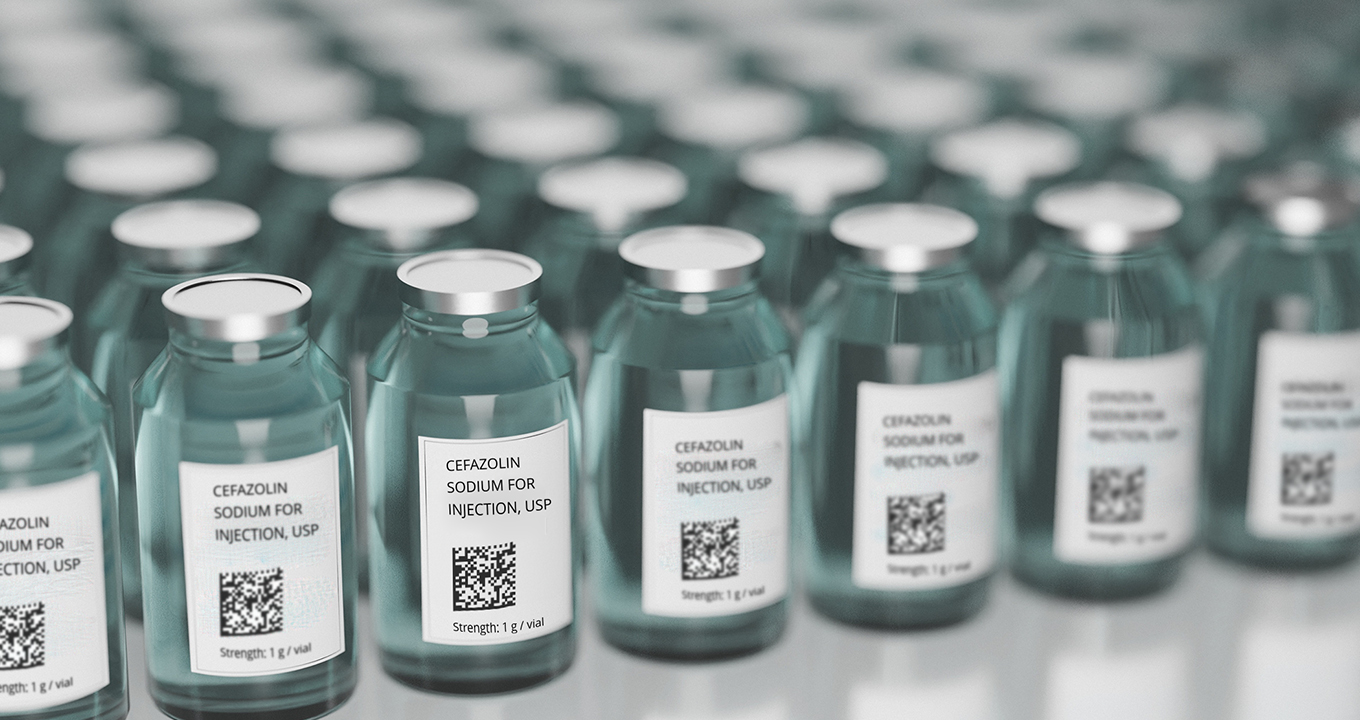
Before weighing performance trade-offs, it is important to understand why barcode scanning is fundamental to pharmaceutical compliance.
Global regulations such as the Drug Supply Chain Security Act (DSCSA) and the EU Falsified Medicines Directive (FMD) mandate end-to-end item-level traceability. Each saleable unit must carry a unique, machine-readable identifier, most commonly a GS1 DataMatrix barcode encoding product ID, serial number, batch/lot, and expiration date.
Barcode scanning enables data capture, verification, exchange, and auditing across manufacturers, distributors, pharmacies, and healthcare providers. Without reliable scanning, serialization systems fail, and compliance cannot be demonstrated.
What Is Scan Accuracy in Pharmaceutical Environments
Regulatory requirements and patient safety make accuracy the foundation of trust in any scanning system.
Scan accuracy is a scanner’s ability to consistently decode barcode data, even when symbols are damaged, distorted, or poorly presented. In pharmaceutical workflows, barcodes may be on curved vials, reflective foil, or partially obscured or degraded during transport.
High scan accuracy is essential because it:
- Prevents data corruption: A single misread serial number can create phantom inventory, broken aggregation hierarchies, or false compliance exceptions.
- Protects patient safety: Accurate decoding ensures the right medication, strength, and expiration date are verified at dispensing.
- Safeguards regulatory standing: Incorrect serialization or verification data can trigger audit findings, shipment rejections, or regulatory enforcement actions.
Inaccurate scans cause errors and compromise the integrity of the entire compliance system.
What Is Scan Speed and Why it Impacts Throughput
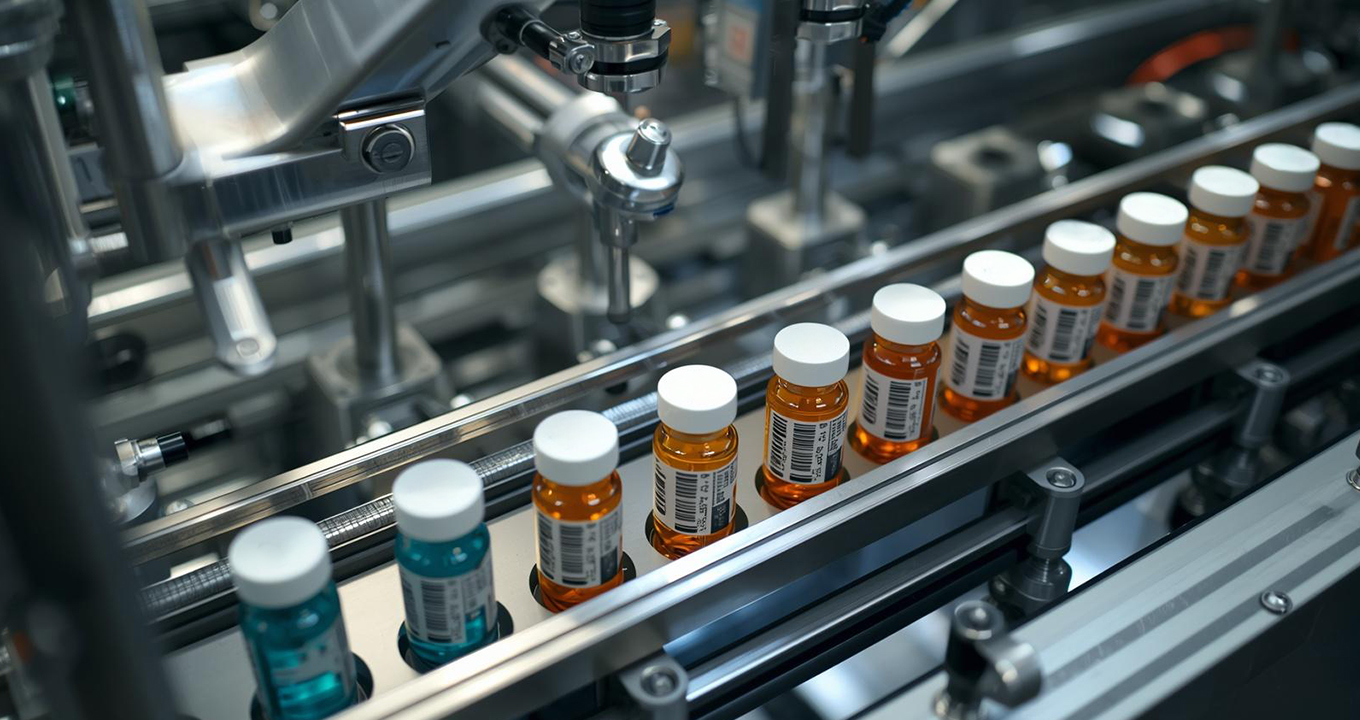
Scan speed refers to the time required to capture, decode, and return barcode data.
Accuracy alone is not enough if the system cannot meet operational demands.
Scan speed is the time needed to locate, capture, decode, validate, and return barcode data. In packaging lines and distribution centers processing thousands or millions of units per shift, even minor delays can quickly accumulate.
High scan speed directly impacts:
- Operational throughput: Slow reads create bottlenecks on packaging lines, conveyors, and verification stations.
- Labor efficiency: Operators waiting for scanners to respond lose productivity and may bypass scanning altogether.
- Data timeliness: Real-time inventory visibility and verification depend on immediate data capture, especially during recalls or shortage situations.
Slow scanning often results in overtime, missed service level agreements, and temporary workarounds that increase compliance risk.
Real-World Example: Vault Health Accelerates Test Kit Registration with Integrated Barcode Scanning
Faster, accurate barcode scanning in healthcare improves efficiency and data integrity.
Digital health company Vault Health integrated the Dynamsoft Barcode Reader SDK into its nationwide COVID-19 testing workflow. Instead of manually entering a 14-digit test kit identifier, users scan the barcode printed on the kit using a mobile device.
This approach significantly reduced manual data entry errors while accelerating test kit registration and tracking for thousands of daily test submissions. By combining fast barcode decoding with reliable data capture, the system improved workflow efficiency while ensuring accurate identification of test samples throughout the testing process.
Read the full Vault Health implementation at: https://www.dynamsoft.com/case-study/healthcare/vault-health-covid19-barcode/
The False Trade-Off: Why Speed and Accuracy Must Coexist
Many organizations mistakenly view speed and accuracy as a trade-off. Prioritizing only one introduces systemic risk.
| Scanning Strategy | Operational Impact | Compliance Impact |
|---|---|---|
| High Speed, Low Accuracy | Frequent rescans and manual corrections | Corrupted serialization data, failed verification checks, audit exposure |
| High Accuracy, Low Speed | Line slowdowns, shipping delays, increased labor costs | Inability to scale serialization and verification to regulatory timelines |
| Balanced Approach | Smooth throughput, minimal friction, high first-pass read rates | Complete audit trails, rapid recalls, sustained regulatory compliance |
True compliance maturity requires high first-pass read accuracy at production-grade speed, without sacrificing either factor.
Technical Factors That Impact Both Speed and Accuracy
Achieving this balance requires more than scanner hardware. It demands an end-to-end approach to the scanning process.
Several technical factors influence scan speed and accuracy:
- Decoding algorithms: Advanced algorithms can reconstruct damaged or low-contrast symbols, improving accuracy while avoiding repeated scan attempts that slow workflows.
- Barcode density and symbology: GS1 DataMatrix codes encode large amounts of data in compact spaces, requiring sophisticated decoding to remain fast and reliable.
- Camera quality and focus behavior: Poor autofocus or insufficient resolution increases time-to-read, especially on small vial labels.
- Environmental conditions: Glare, shadows, motion, and reflective packaging can degrade performance without proper image preprocessing.
- Software configuration: Restricting scanners to required symbologies and formats reduces unnecessary processing and accelerates reads.
The best results come from solutions that optimize these factors together, not in isolation.
Best Practices for High Speed, High Accuracy in Pharma

With the right strategy, pharmaceutical organizations can achieve both speed and accuracy without compromise.
Leading teams follow these best practices:
- Adopt enterprise-grade decoding software: Use commercial SDKs engineered for high-density 2D codes, damaged labels, and real-world variability, not consumer-grade scanners.
- Enable multi-barcode and batch scanning: Reading multiple codes in a single frame dramatically increases throughput without sacrificing accuracy.
- Standardize print quality at the source: High-contrast, well-positioned labels reduce downstream scanning friction and exception rates.
- Optimize scanning configurations: Limit decoding to required symbologies and data formats to eliminate wasted processing cycles.
- Validate locally, verify globally: Perform immediate format checks on-device while handling database or EPCIS validation asynchronously to maintain speed.
Implementing these practices together leads to measurable improvements in first-pass read rates, line efficiency, and audit readiness.
How Dynamsoft Eliminates the Speed-Accuracy Trade-Off
At Dynamsoft, we develop barcode scanning technology for environments where reliability is essential.
The Dynamsoft Barcode Reader SDK is designed for pharmaceutical and healthcare applications, where barcodes are often small, curved, reflective, damaged, and time-sensitive. Its advanced decoding engine, intelligent image preprocessing, and high-performance architecture deliver enterprise-level accuracy at production-line speed.
This results in fewer rescans, higher throughput, improved data quality, and stronger compliance with DSCSA, FMD, and future global traceability requirements.
Take the Next Step
Modern pharmaceutical compliance depends on fast, accurate, and scalable scanning systems.
If your organization is upgrading serialization, verification, or track-and-trace systems, Dynamsoft can help eliminate the perceived trade-off between speed and accuracy.
Download a 30-Day Free Trial to evaluate the solution.
Contact Our Sales Team to explore a customized implementation.