


Category: barcode practices
-

A digital product passport is a structured, machine-readable record detailing a product’s identity, composition, and lifecycle. It is accessed by scanning a data carrier, such as a QR code, on the product or packaging. The passport consists of five layers: a persistent unique identifier, a data carrier with a resolvable...
Read more › -
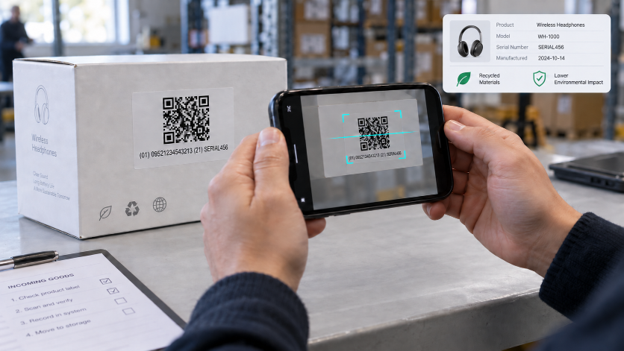
QR codes enable Digital Product Passports by linking physical products to their digital records. The QR code does not store passport data directly; instead, it encodes a unique product identifier, typically as a GS1 Digital Link URI, which a scanning application uses to retrieve passport data from the manufacturer. This...
Read more › -
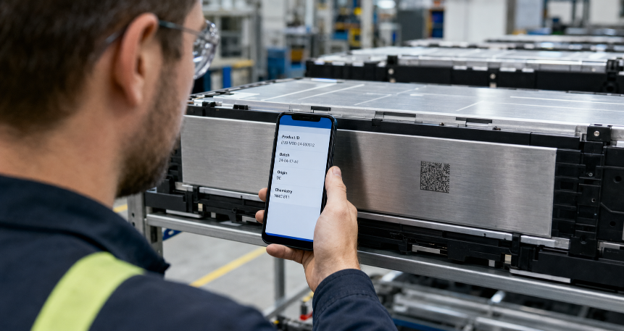
A Digital Product Passport (DPP) is a structured, machine-readable record that details a product’s identity, materials, origin, sustainability, repairability, and end-of-life handling. Each DPP links to the physical product via a permanent unique identifier encoded on a data carrier such as a QR code, Data Matrix, or RFID tag. The...
Read more › -

Modern electronics manufacturing operates at high speed, processing billions of small components such as printed circuit boards (PCBs) and integrated circuits daily. Accurate tracking of each component is essential. Among the most sophisticated identifiers used in this field are small DataMatrix codes, tiny 2D barcodes etched or printed directly onto...
Read more ›